Six stations. One building.
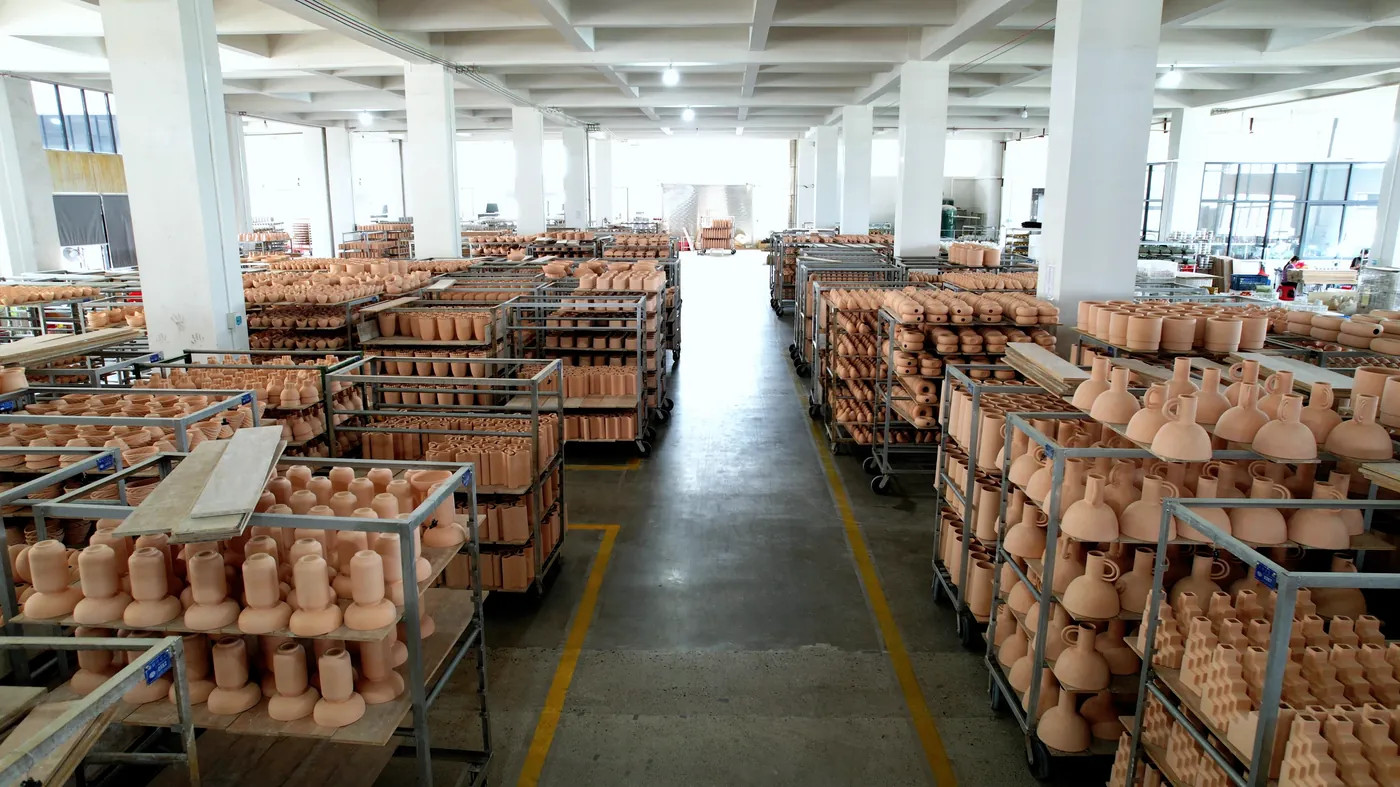
Everything from the plaster mould to the packed carton happens on our own floor in Chao'an. This is the route a piece takes.
Slip castingHand finishing3 kilns
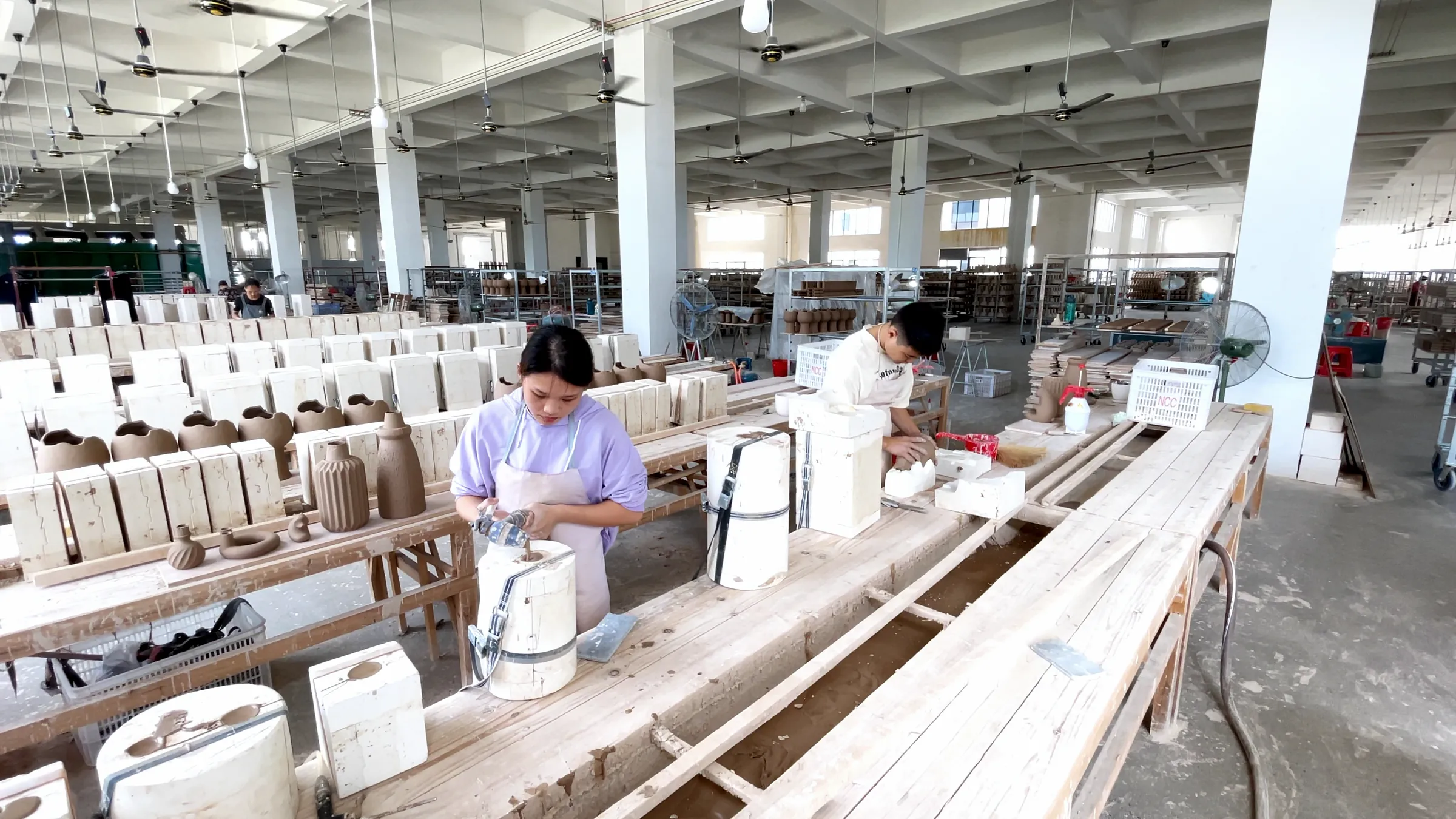
Everything from the plaster mould to the packed carton happens on our own floor in Chao'an. This is the route a piece takes.
Every design starts as a master model, from which plaster moulds are cast in-house. Plaster is porous: it is what turns liquid clay into a wall. Moulds are stored in racks by design and replaced as they wear, so the wall thickness of the thousandth piece matches the first.
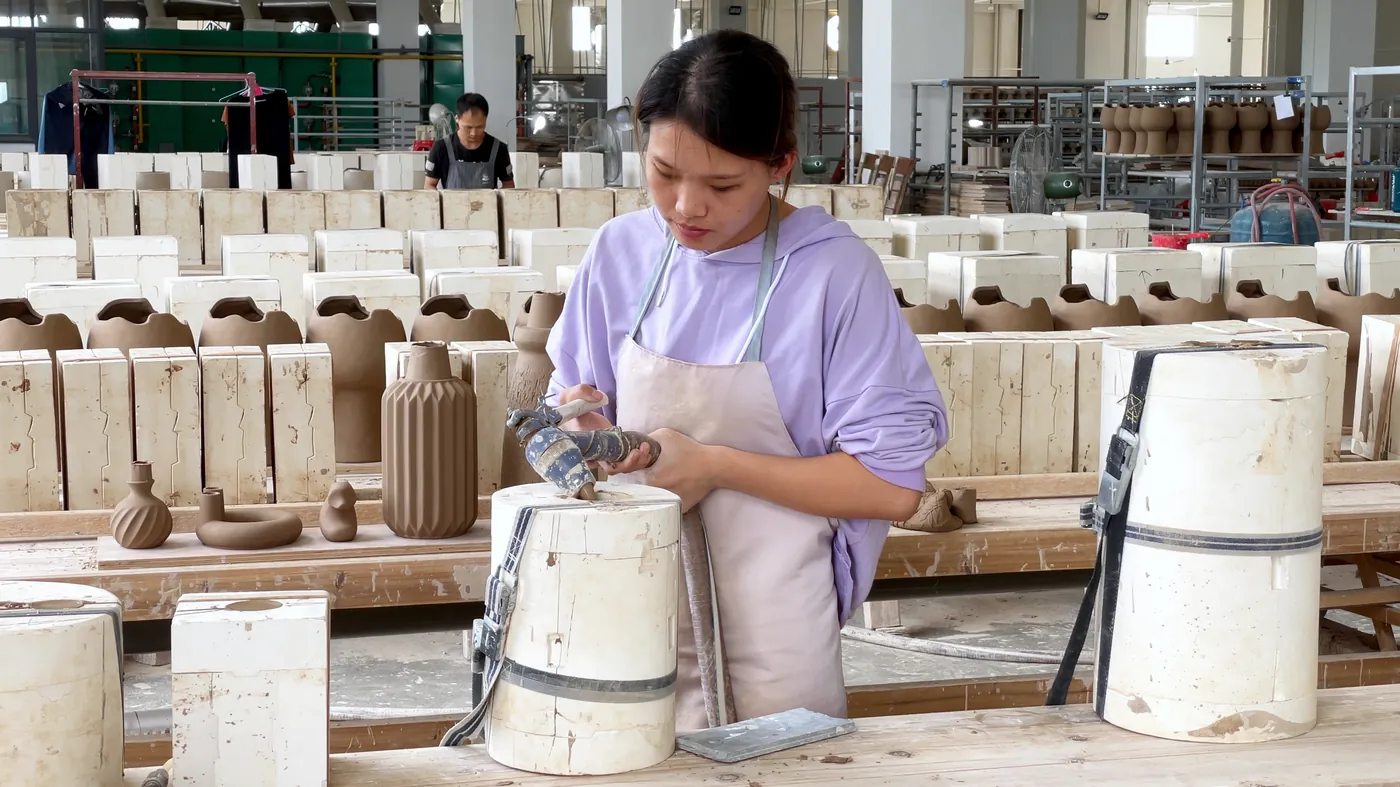
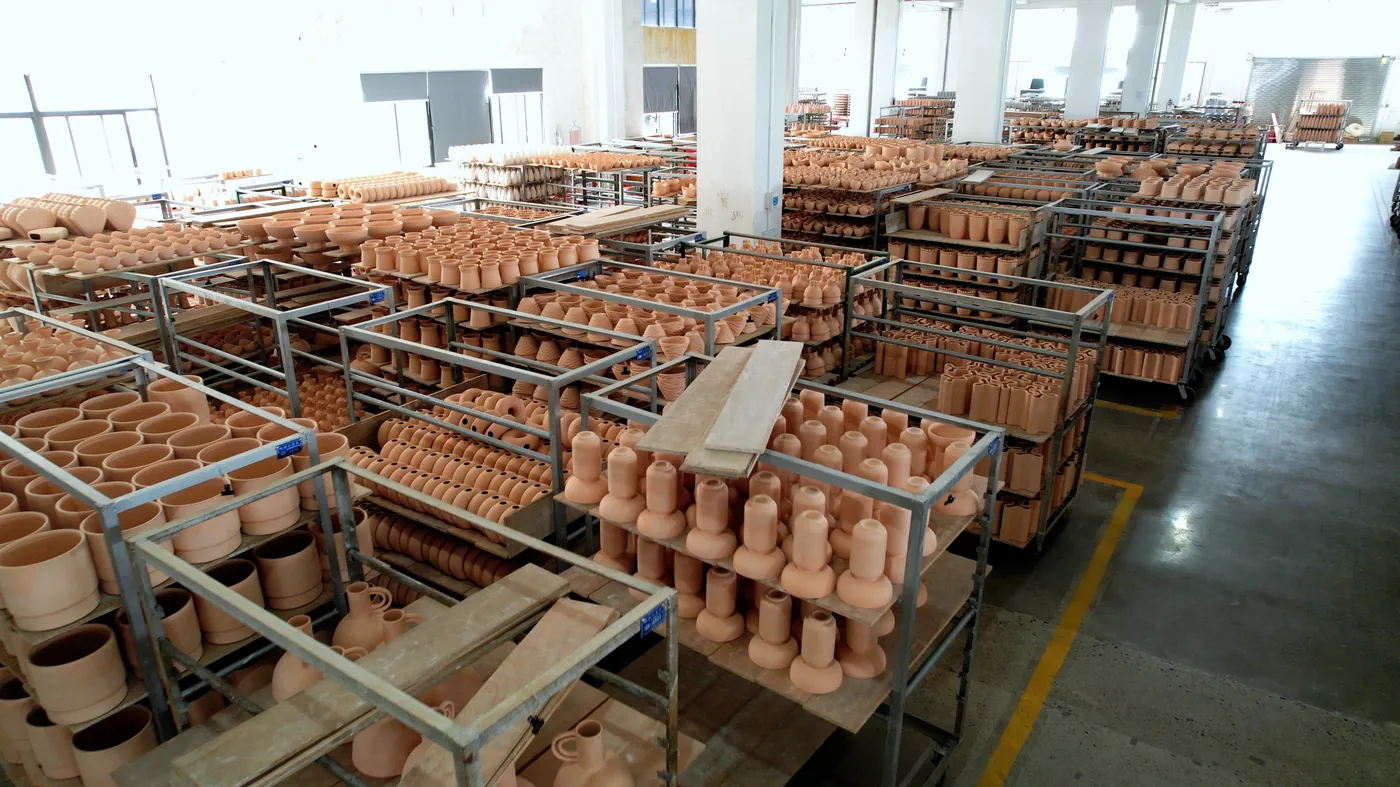
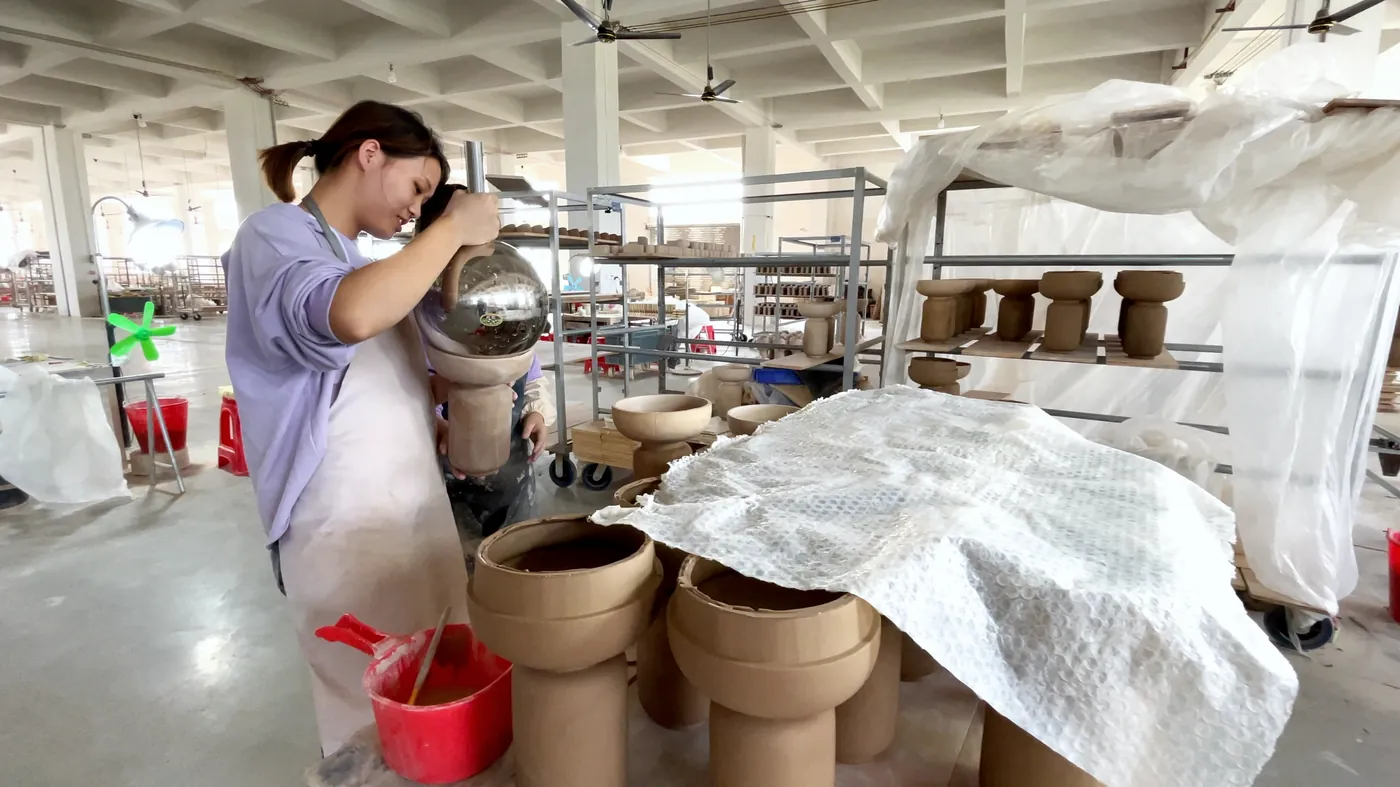
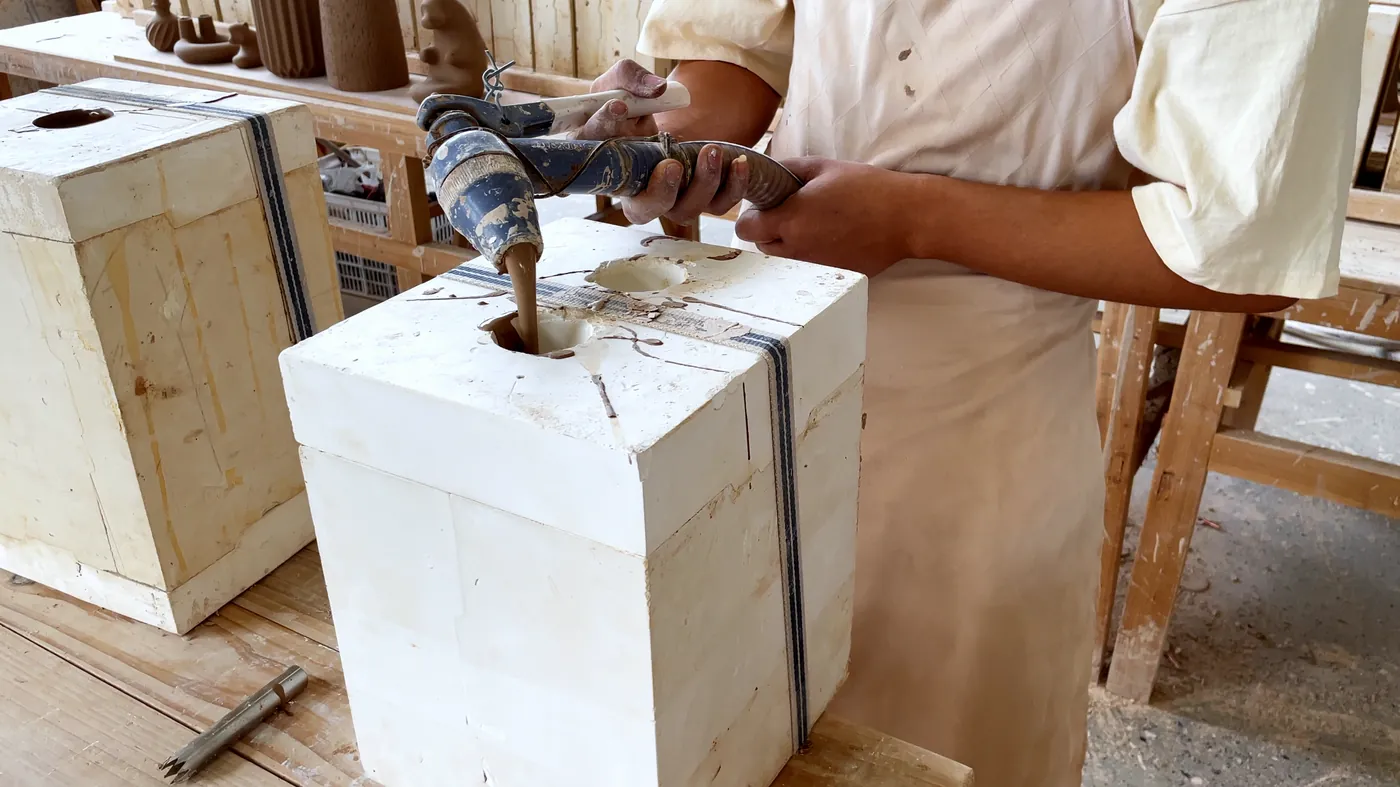
Slip, a liquid clay body, is poured into the closed mould. The plaster draws the water out and a wall forms from the outside in. When the wall has the right thickness the surplus is poured back, the mould is opened and the piece is left to firm up on the bench.
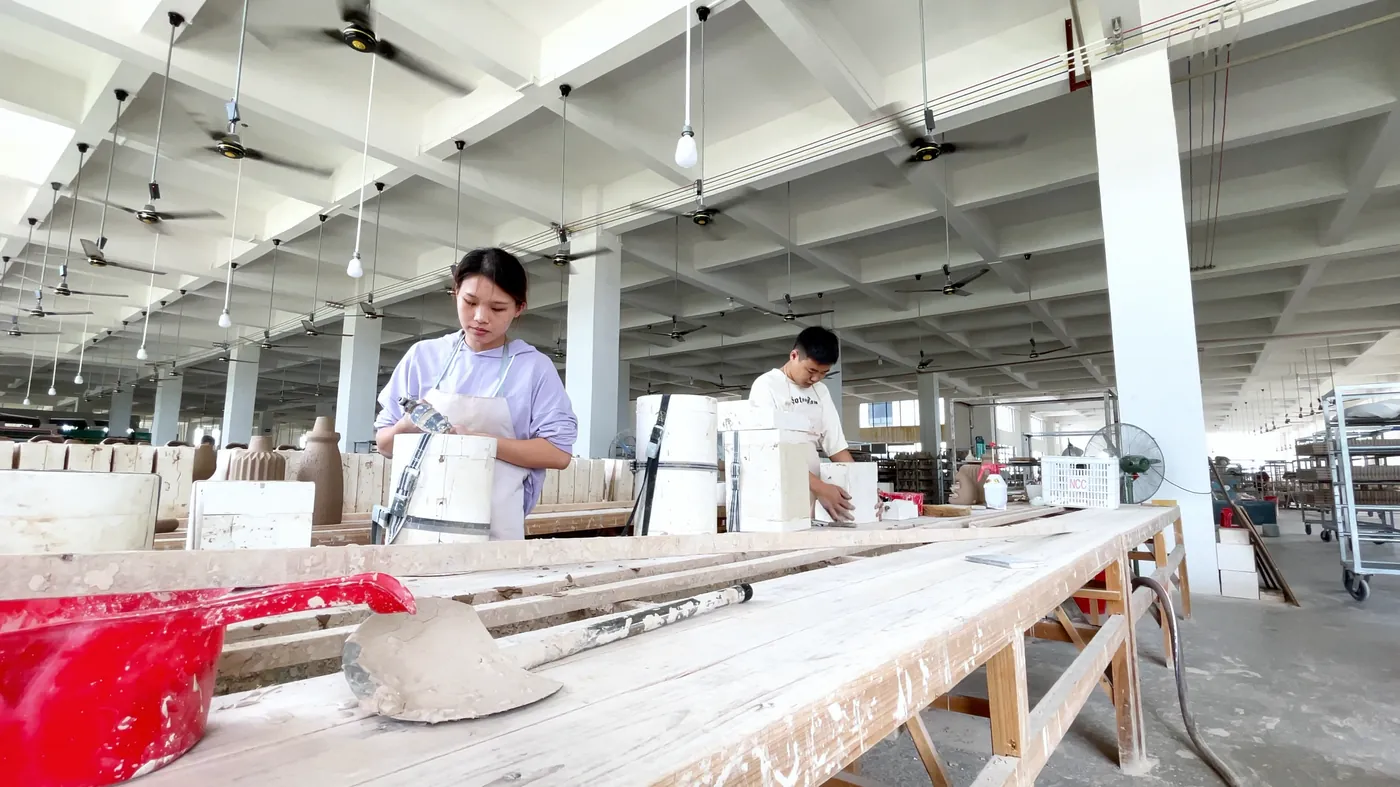
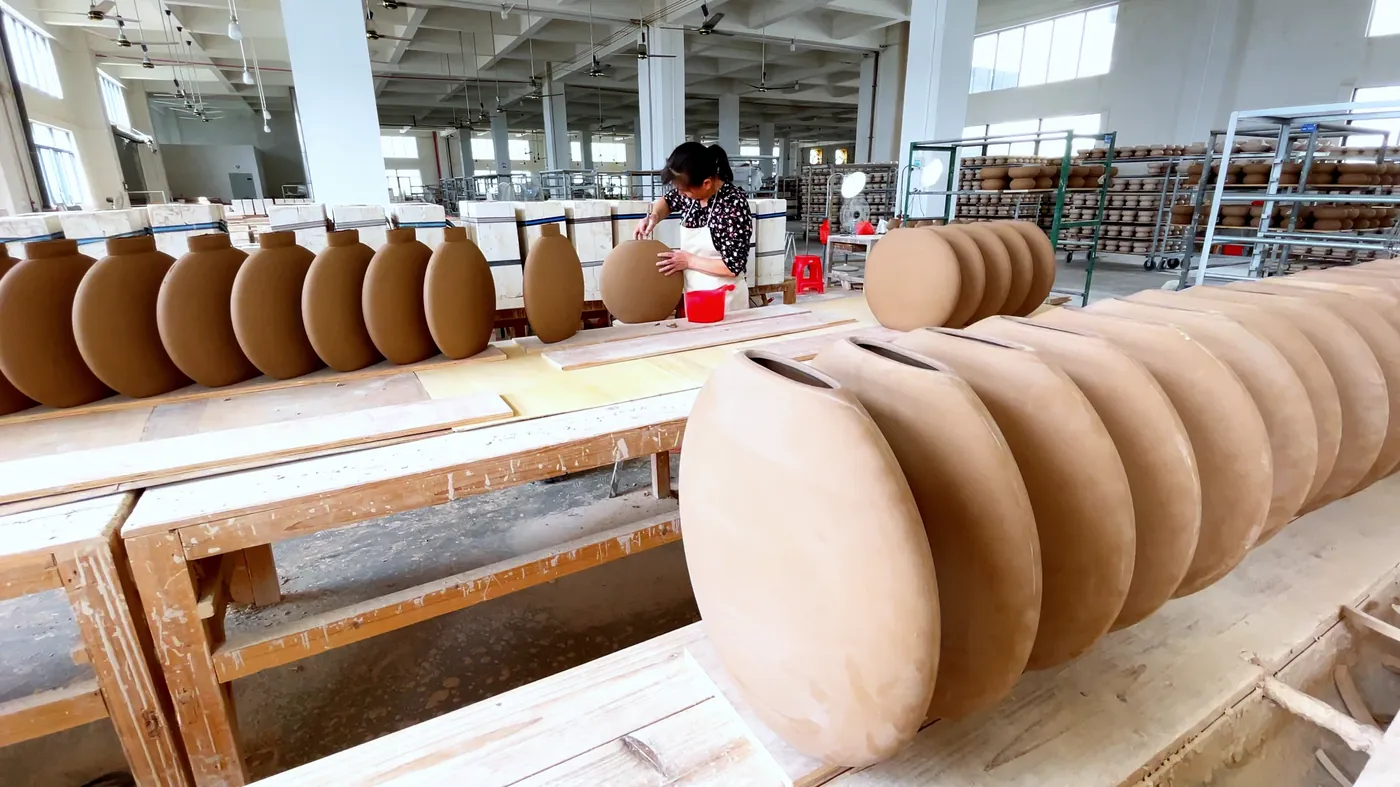
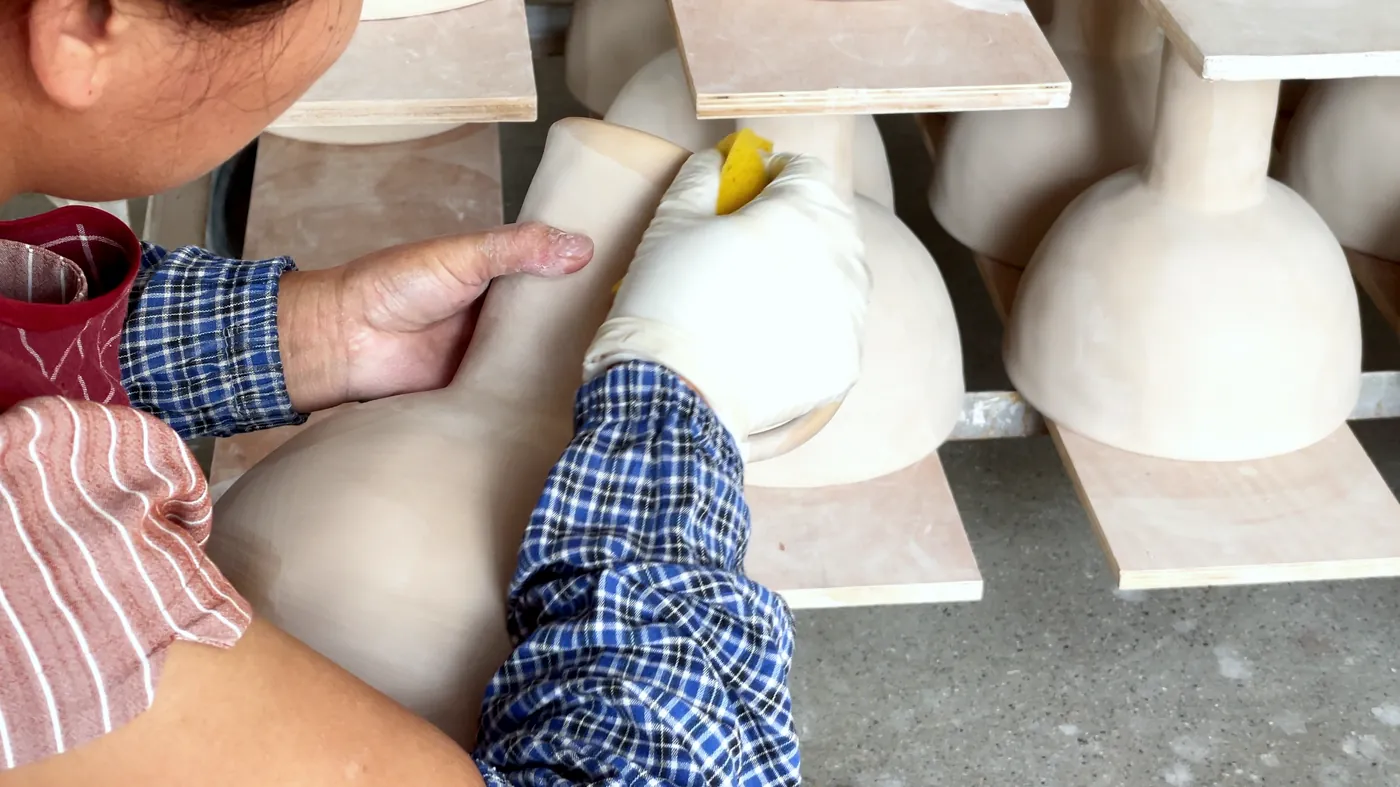
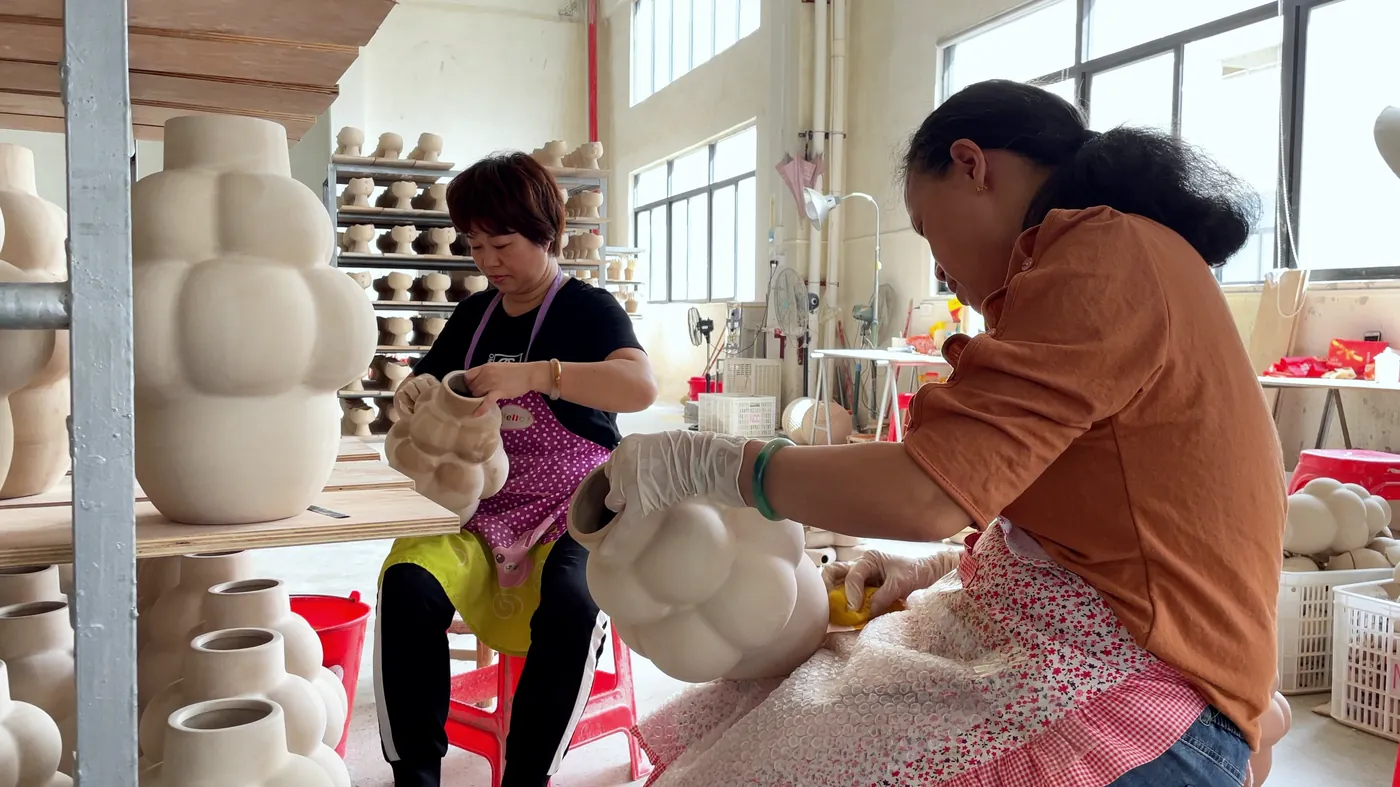
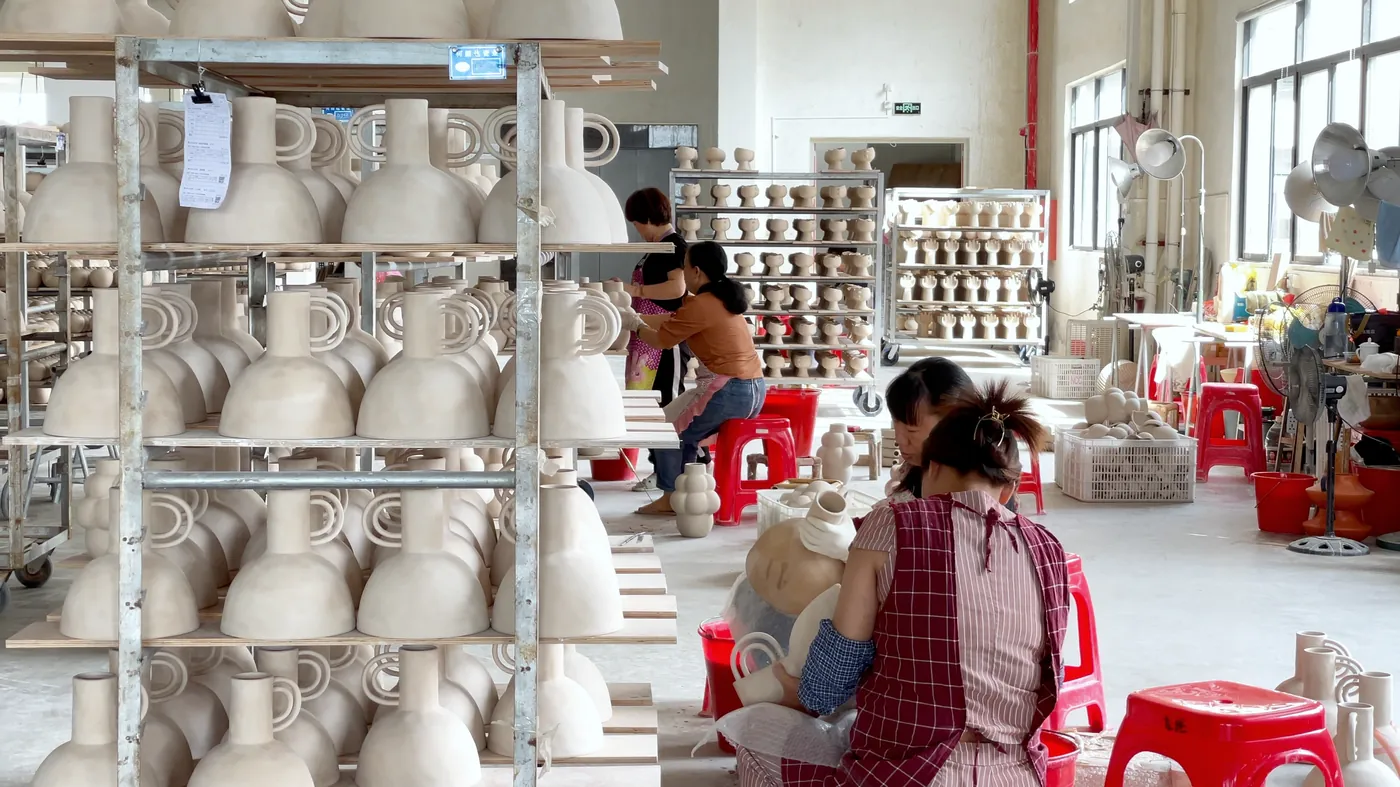
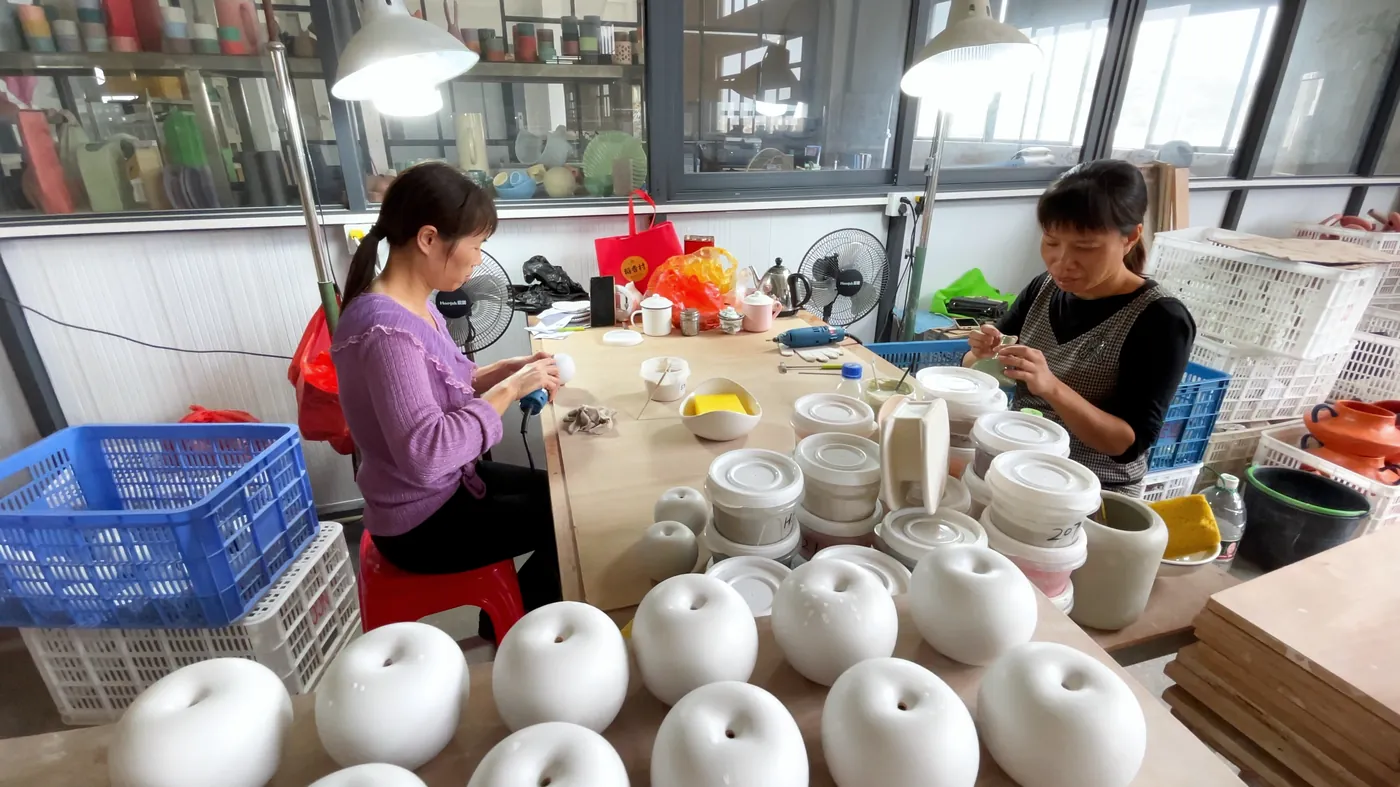
While the clay is leather-hard, seams are trimmed and every surface is sponged by hand. This is slow work and it is where a matte piece gets its even skin. Openings are cut, handles and accents are joined, and the piece dries fully before its first firing.
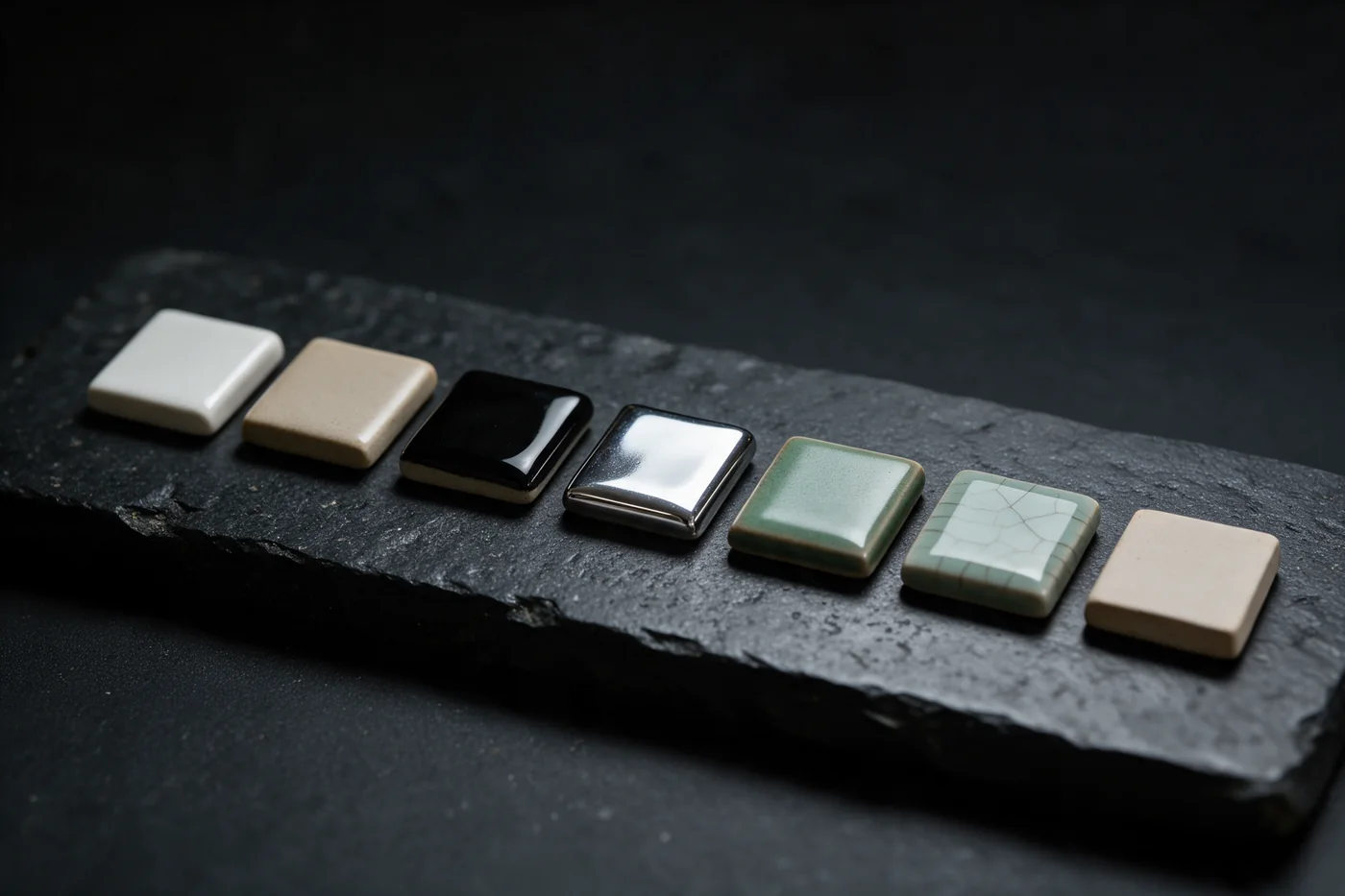
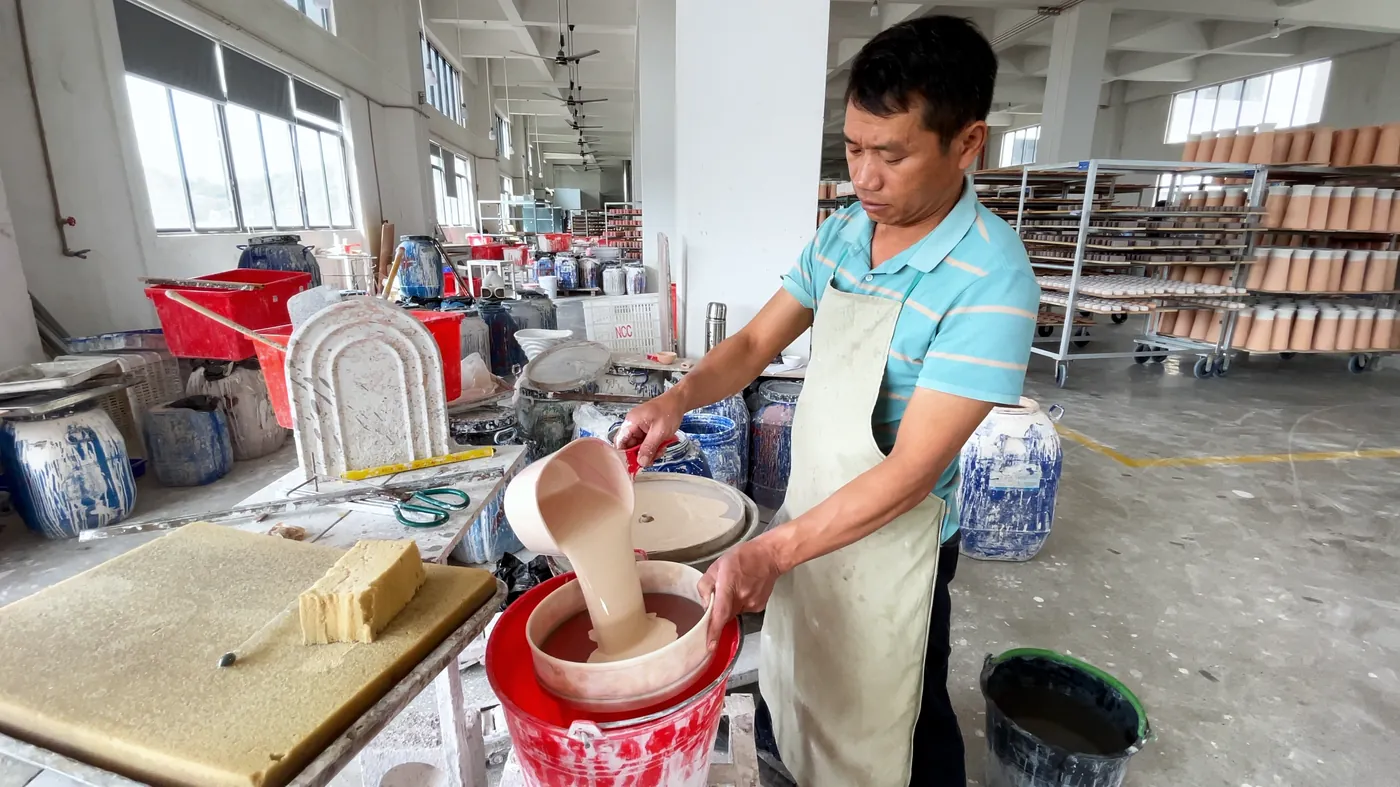
Glazes are mixed on site, as they have been since 1986. Pieces are dipped, poured or sprayed depending on the surface: matte and satin finishes are dipped, interiors are poured, metallic pieces are plated after the glaze firing. Batches are kept small so colour stays consistent across an order.
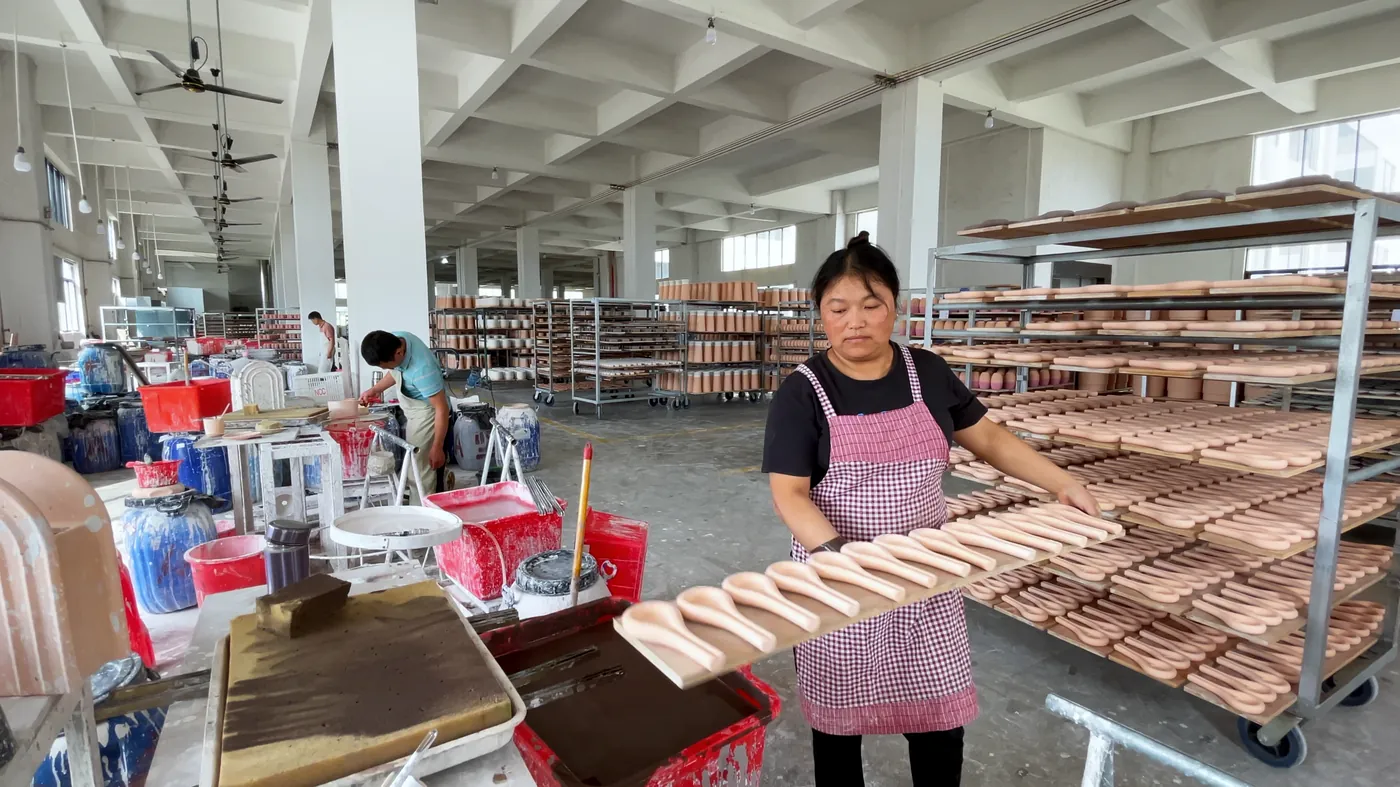
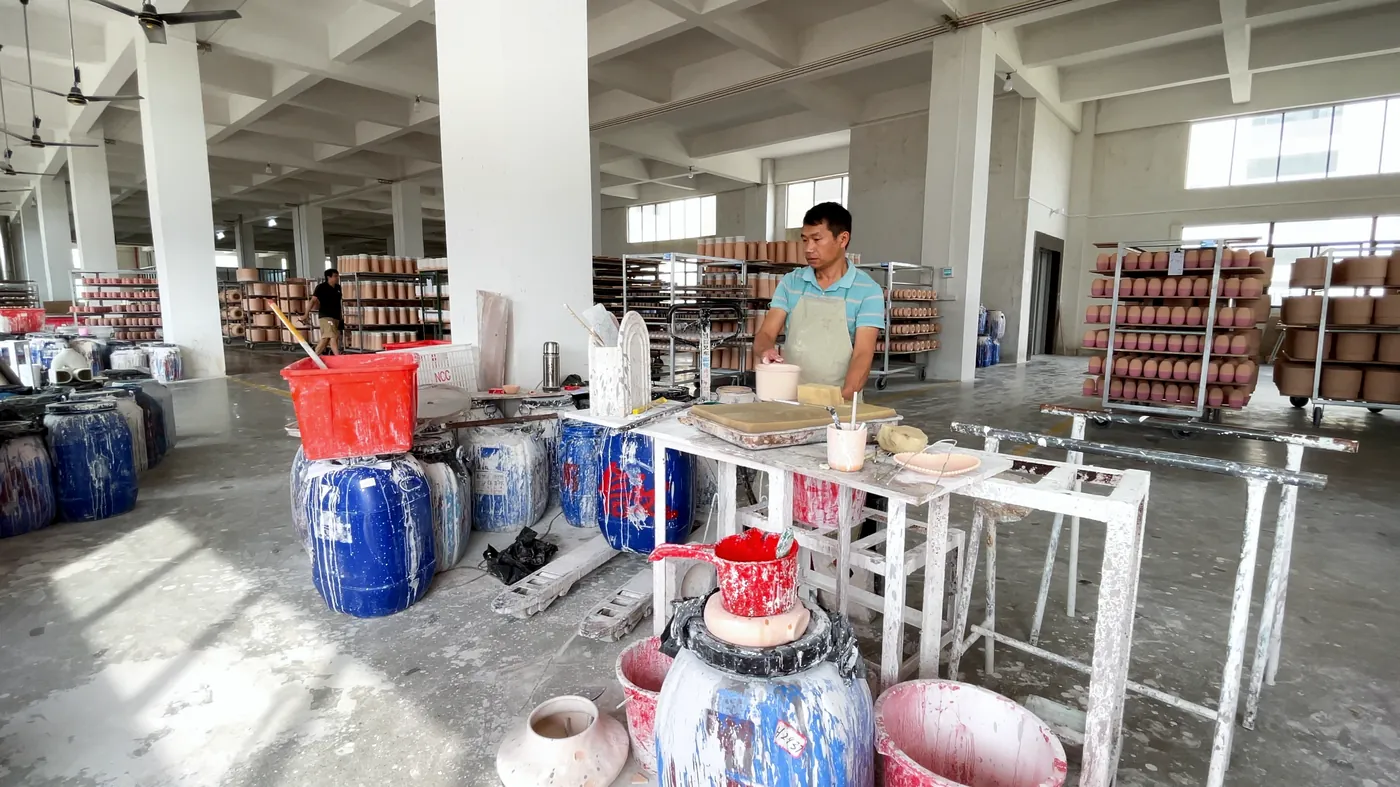
Three gas-fired shuttle kilns run the bisque and the glaze firings. Kiln cars are loaded by design and by glaze so that a whole run sees the same heat. Firing is the part of the process nobody can rush, and the reason we keep three kilns rather than one big one.
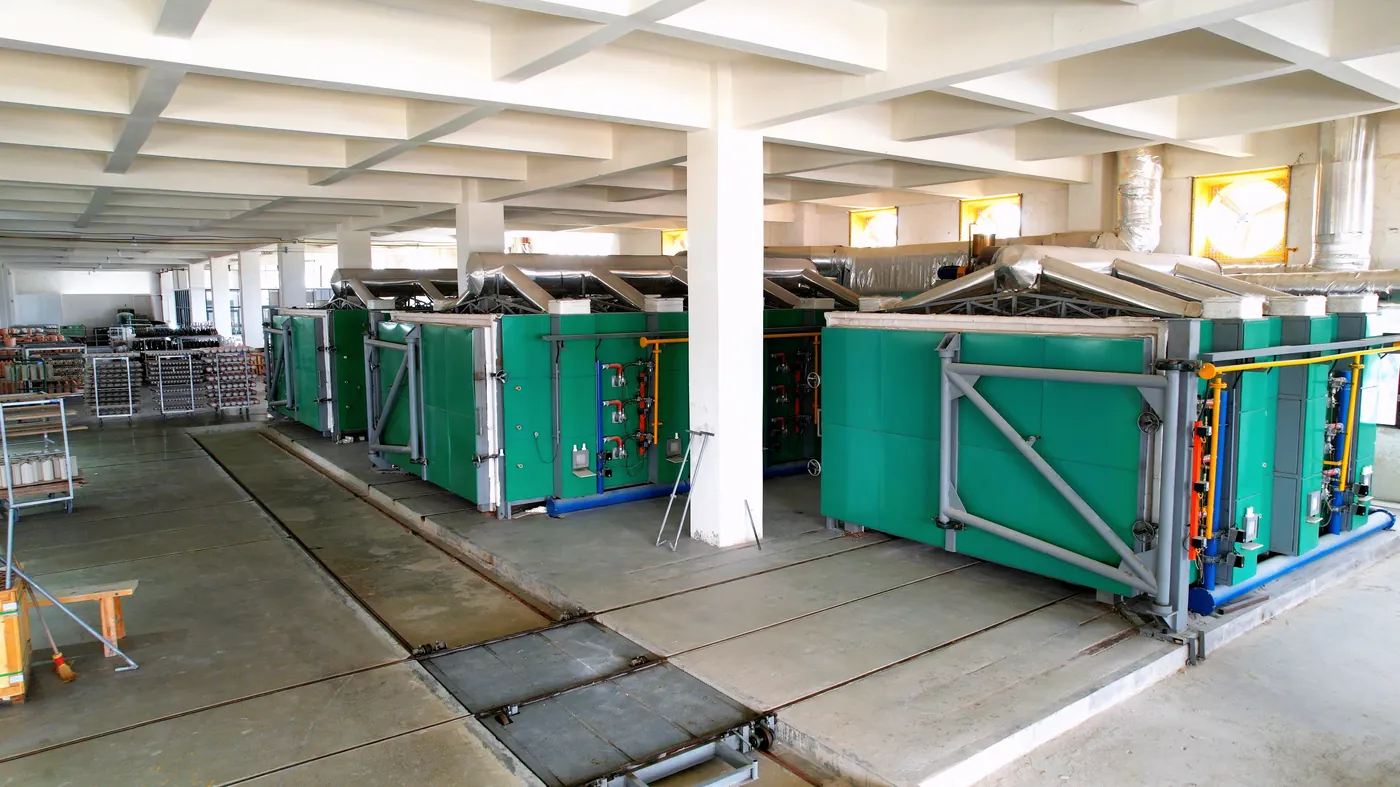
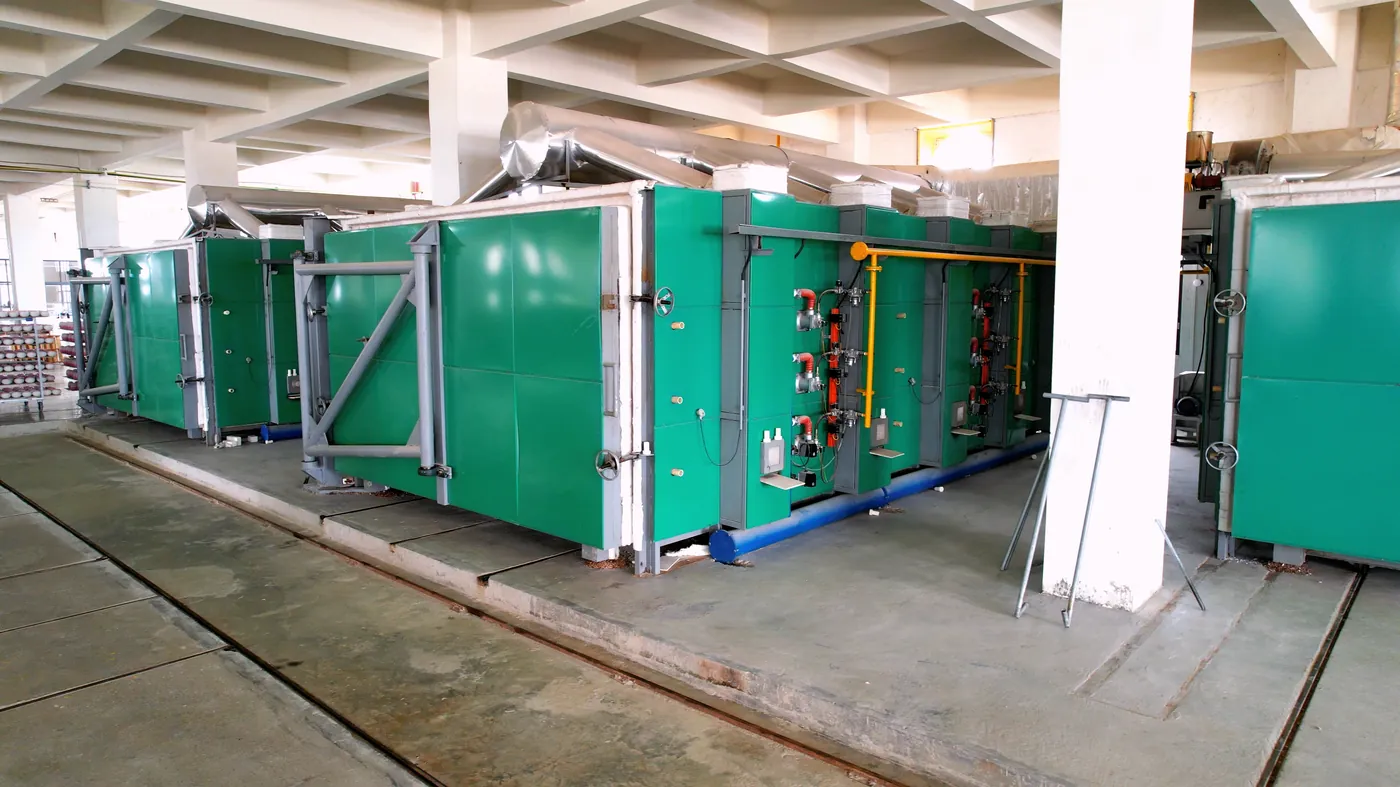
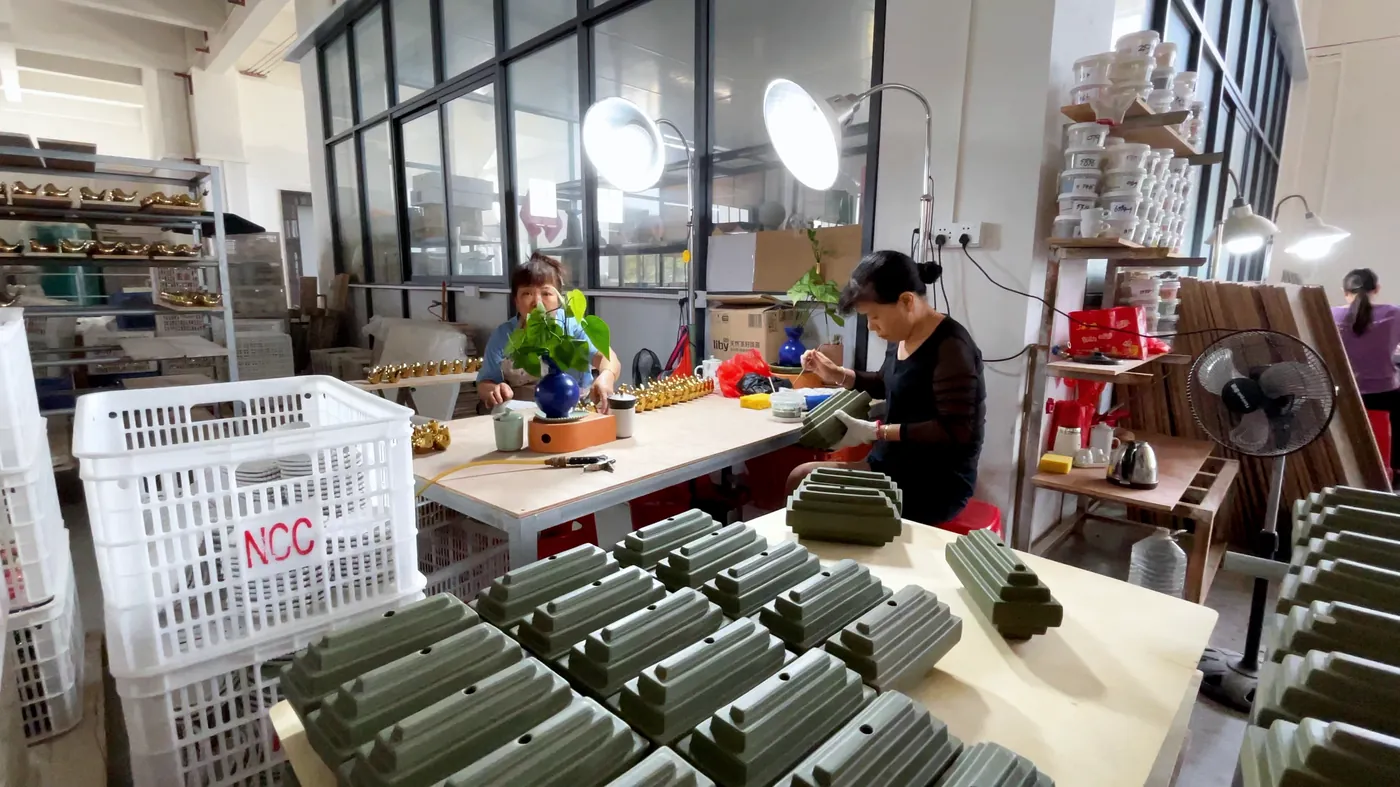
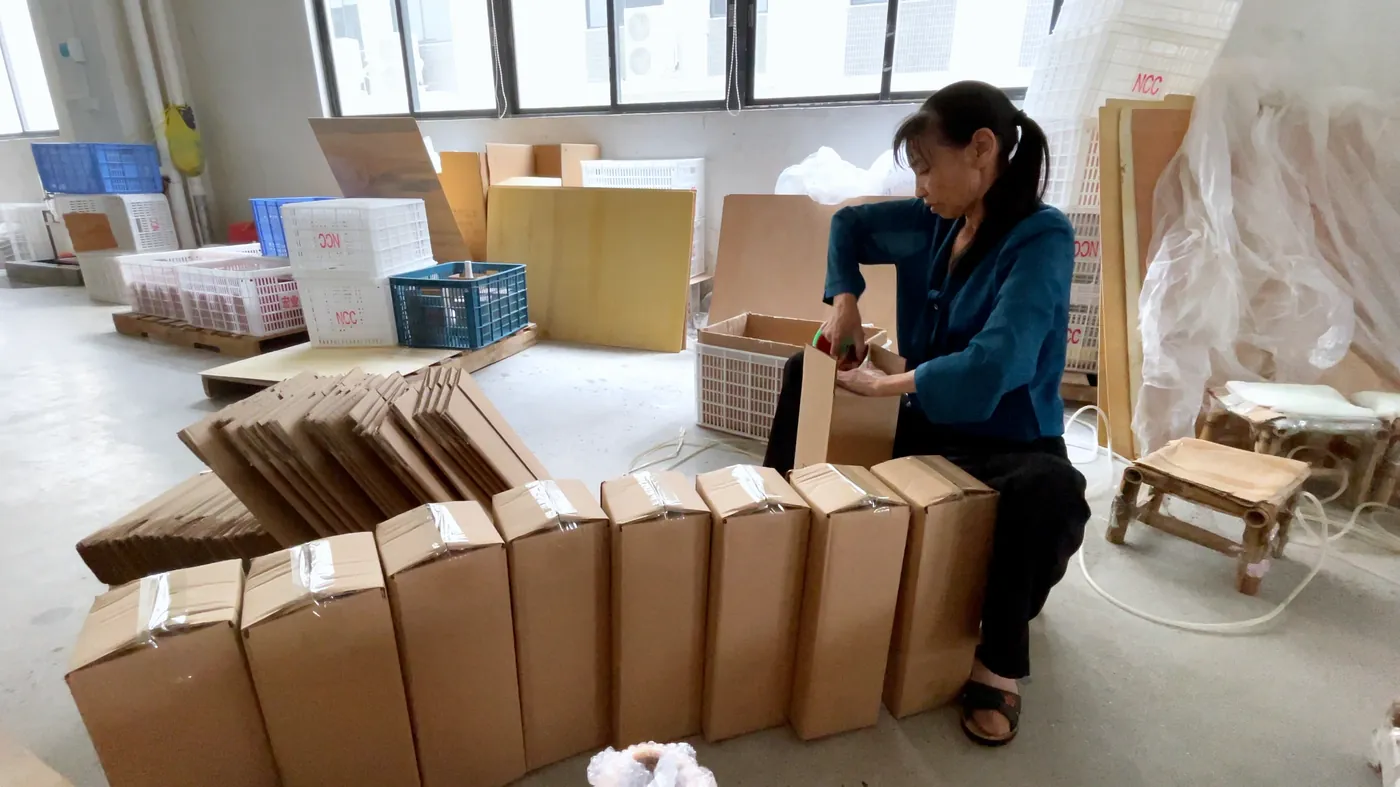
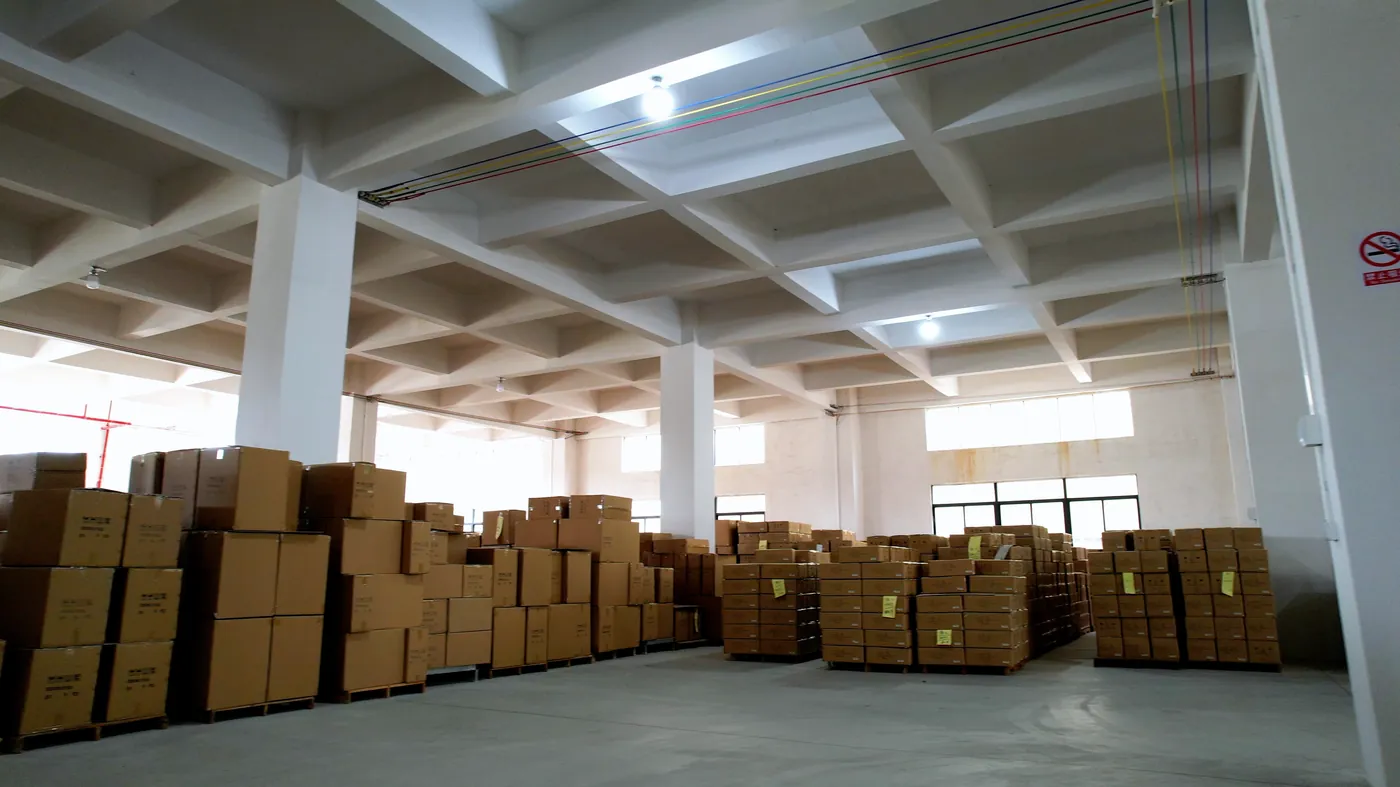
Metal fittings, candle cups and inserts are fitted after the final firing. Every piece is checked under the lamp, wrapped and boxed in export cartons in the same building it was cast in. Orders ship from Shenzhen, Guangzhou or Ningbo.
We are two hours from Shenzhen. Samples of any design in the range can be sent before a first order.